The overall brand of our film is to create a mystery for the audience to solve. We want the viewers to feel involved and feel as they are part of the story as well. An audience that appreciates mystery and enjoys the deep analytic part of it is who we would most likely be reaching out to when showing our film. Another aspect of our film that isn’t prominent, but is still present is the theme of female representation and empowerment. Our movie casts the lead as a female detective which is not a very common role that women portray in the media. Through our research, we have typically found that men are casted in these authoritative roles such as detectives and police officers. By having a female detective lead, we are hoping to reach out to women and girls of all ages by having some representation for them. This aspect of our film can even be used to reach out to all different types of audiences because it is a rare sight to see a women in these roles, so other men and boys could be interested to see a movie of this type too. As for age, the rating of our movie would most likely be PG-13, due to some violence, gore, and disturbing images. This is an ideal range for us because teenagers and adults will be able to see the movie and this rating would make kids want to watch it as well.
The production company we chose to go with was Next Wave Films, an independent film production company. Due to our movie not being produced with a bigger company, we are expecting a lower count of viewers to see our film.
My partner and I started creating the foundation of our title sequence with the script. We were struggling initially because we had an idea for the basis of our film at the beginning of this project. However, once we started to research about genre conventions and watched other title sequences in genres similar to ours, we realized that our idea needed improvement. The issue with our initial idea was that it was too similar to something of a short film, rather than just a title sequence. We were trying to pack too many events into a 2 minute video, which we had to change. So we came up with a new idea that we think will work better and we wrote the script for it, so as of right now this is our plan.
Beginning shows the evidence of a murder taking place, includes blood, dead body in white costuming (actress), murder weapon, possibly broken window, hand prints, finger prints, feet prints; include long takes and pedaling shots of evidence, fading between evidence
Graphic match to detective from newspaper fade
Start off showing the newspaper that has all the murder details and that’s an intro for the murder and then it goes to the detective talking about it
Detective is holding newspaper and reading about the murder details and what happened and then it shows a male detective that she works with snatching the newspaper out of her hands saying like this case is really difficult we dont have any leads on it so you shouldnt be doing this leave this to the men
Most likely include
Girl takes a spare newspaper, looks at it, possibly realizes something
Close up then fades to black, cue title
Close up of her, then shows her walking out of the room
My partner and I began to research different production companies that deal with movies such as ours. One company that stood out to us was Next Wave Films. This is an ideal production company because they are an independent film channel and our film would definitely be an independent film due to the budget. We also wanted to stick with this company because they produce several movies within the genres that we are delving into, such as crime, drama and mystery. Some of their films include Following and Pi. Both are movies within the same genres and so we feel that this company would be able to effectively produce our film based on our ideas.
Because we are choosing to go with an independent production company, we expect a large different in audience interaction than with a large studio film. Due to the low budget, we know that there will not be a large source of income from this movie. Therefore, our audience will not be large and will be more of a small intimate demographic that is being targeted.
Since our movie falls under a few different genres, I feel that this is going to be the selling factor to the production company.
The research phase was pretty extensive. I really had no idea that so much thought and planning went into the genre conventions and representations of a film. This information was pretty difficult to find and we had to dig deep for it, but as we started to find more information, the process became a lot easier and we felt more confident about planning our film. The research went fairly well and we have to soon start planning out the script and the business aspect of the film industry. I am slightly worried about this part of research because we haven’t discussed too much about this, so hopefully the research of this is not too difficult. Our plan is to just keep analyzing more movies within our genre because this really is the basis and inspiration for our title sequence. Watching other films in our genre allows us to make similar choices about the production, distribution, and exhibition of our title sequence.
Blog posts are kind of difficult to keep up on. There is just so much information that we have to have on here and it is a little overwhelming having to constantly update on this blog website about the process of our filmmaking. While the research is going fairly decent, it has been a struggle to find the right information that we need in order to film the movie, which is a little worrisome because we don’t know for sure how this is going to go.
We had an original idea about this film when proposing it to Cambridge, but after researching about different genre conventions and analyzing other movies within the crime, mystery, drama and thriller genres, we have pretty much changed the whole idea except for the fact that it involves detectives and murder. We haven’t fully developed the idea yet but as we keep continuing with the next stage of research we should have our fully thought-out plan.
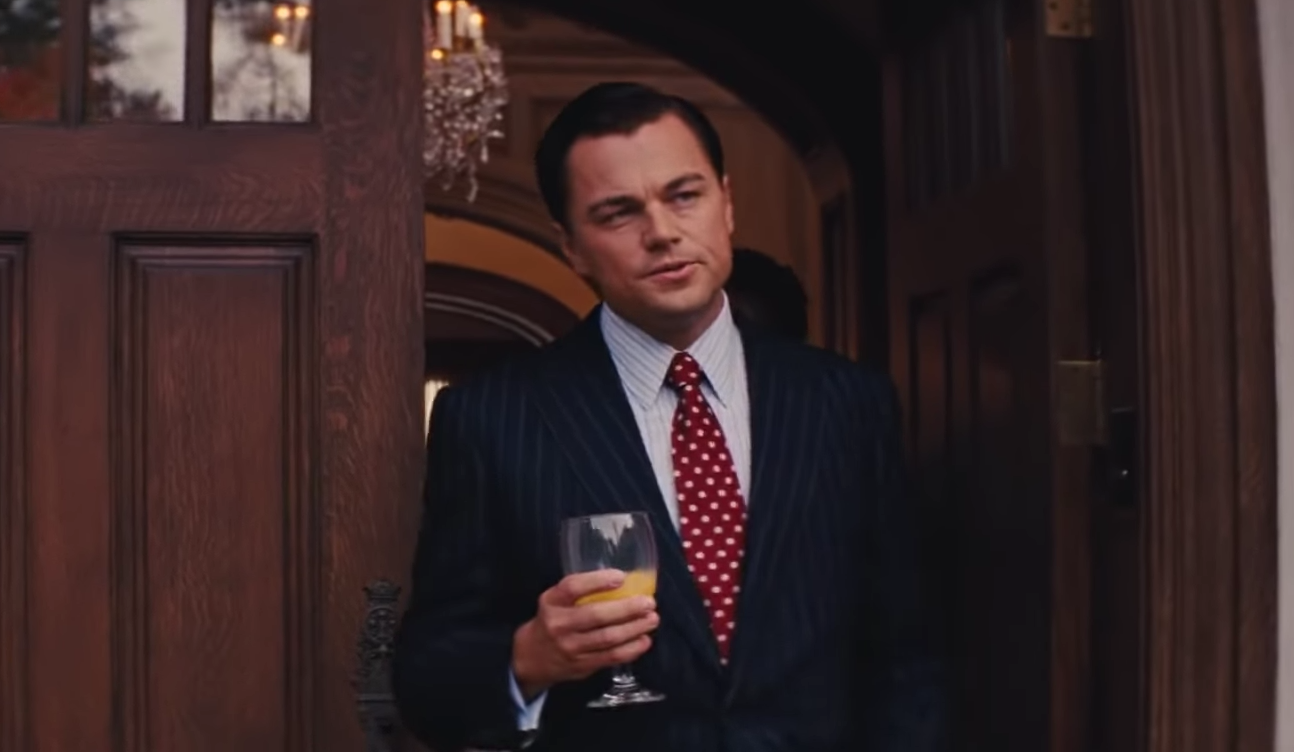
One movie that falls within the crime genre is The Wolf of Wall Street. I decided to complete a shot-by-shot analysis of the opening title sequence, so that I could better understand the components of a title sequence in this genre.
Mise-en-scene
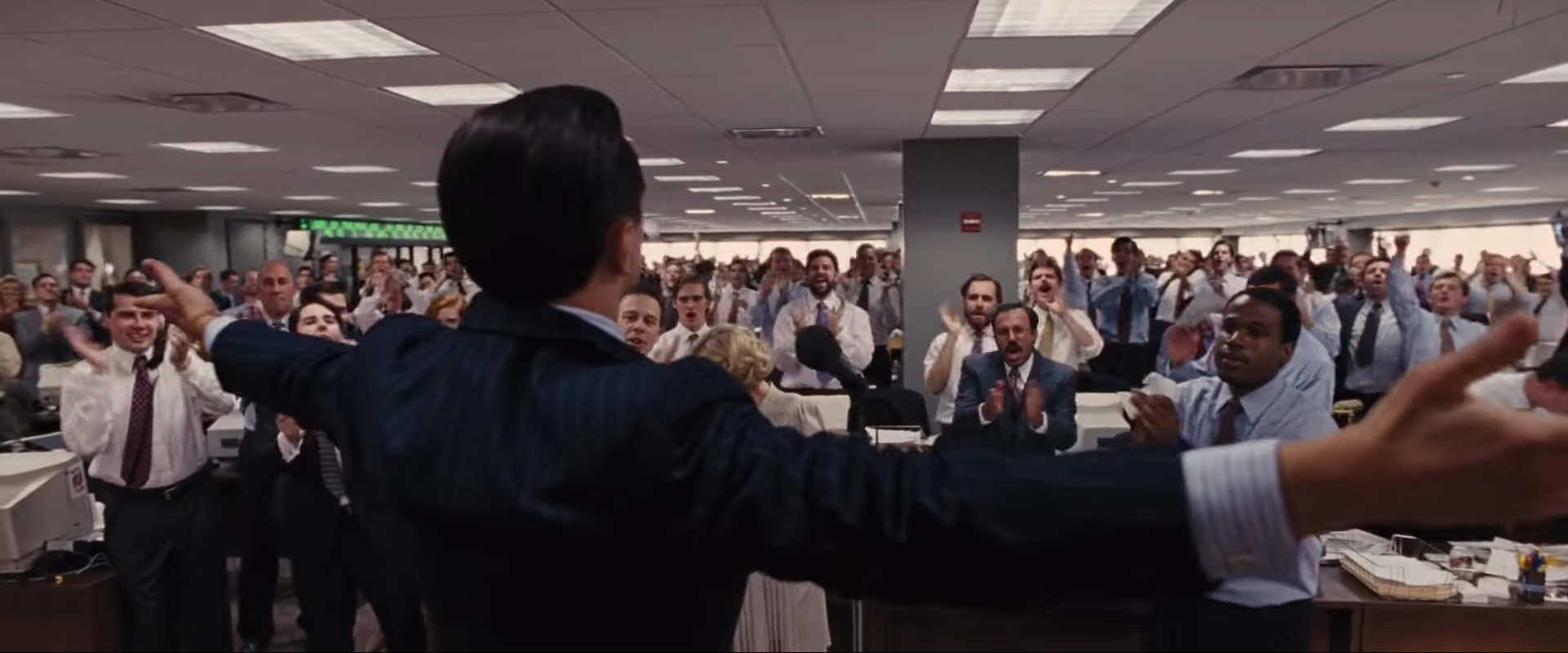
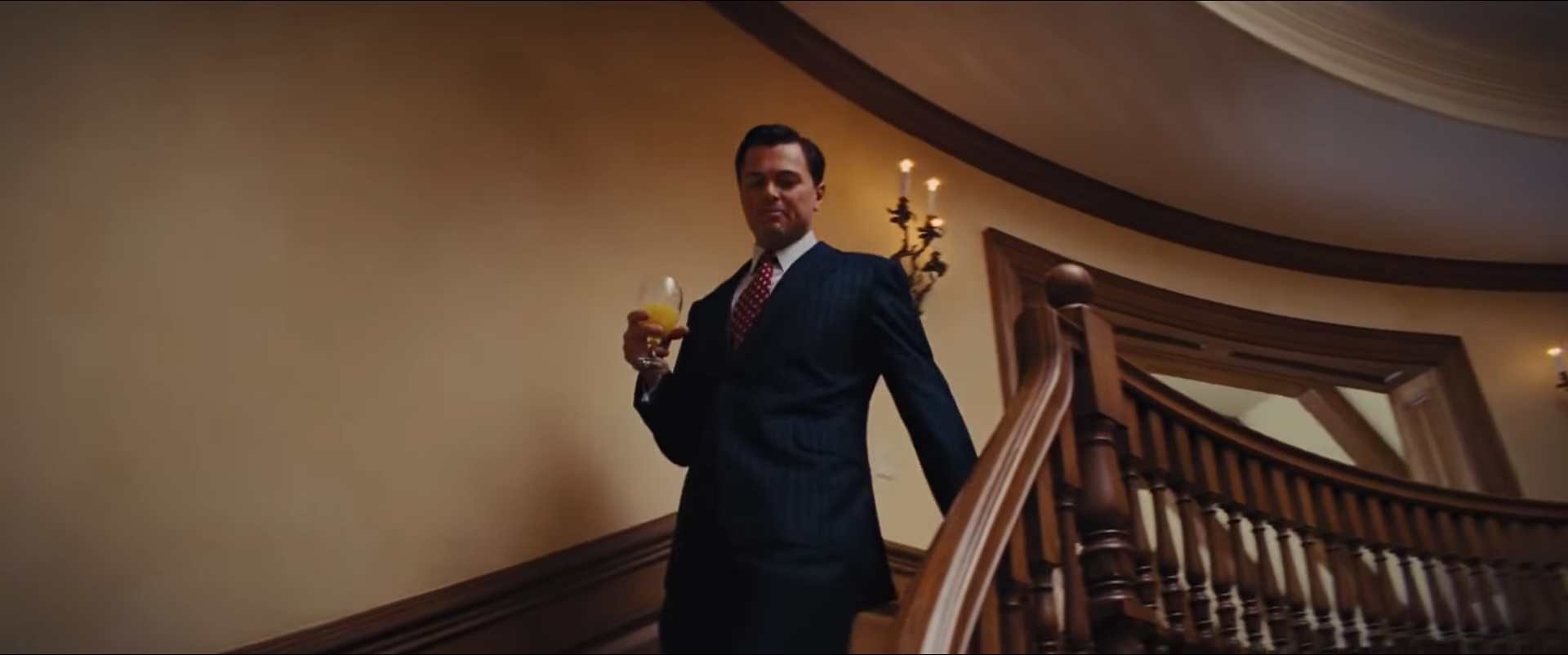
The costuming of the characters in this opening sequence is very professional. Leonardo DiCaprio’s character is dressed in a black suit, which is a symbol of his wealth, power, and authority. At the end of the clip, the other men in the office are wearing similar outfits that he is wearing, so it shows that they all have an important role in their work.
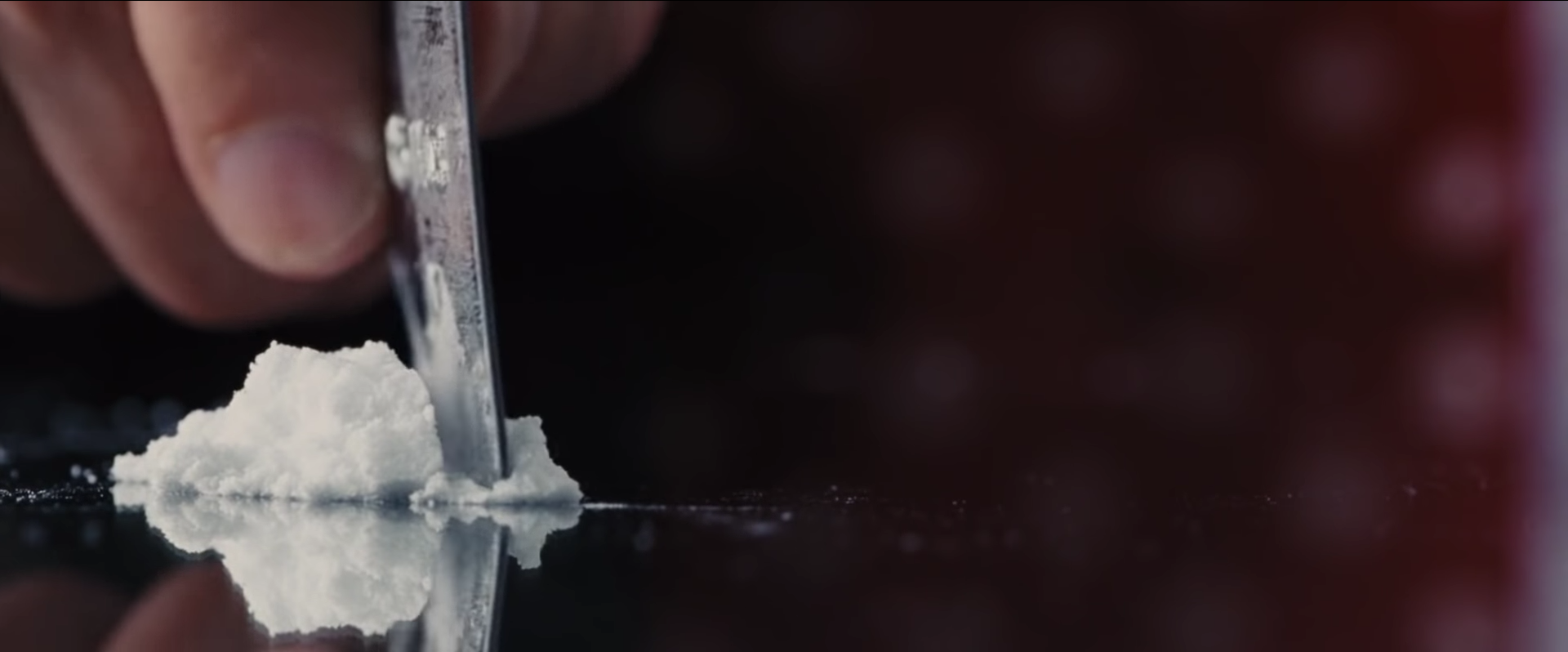
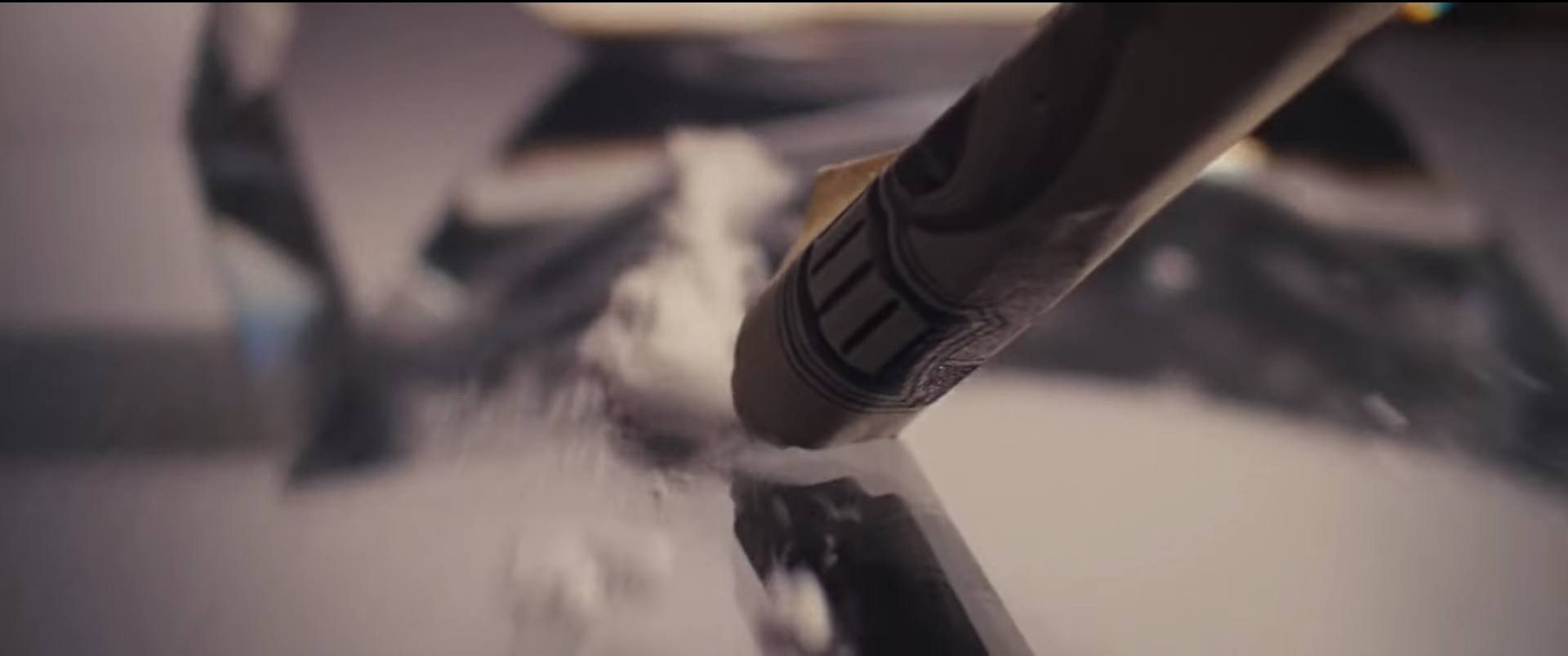
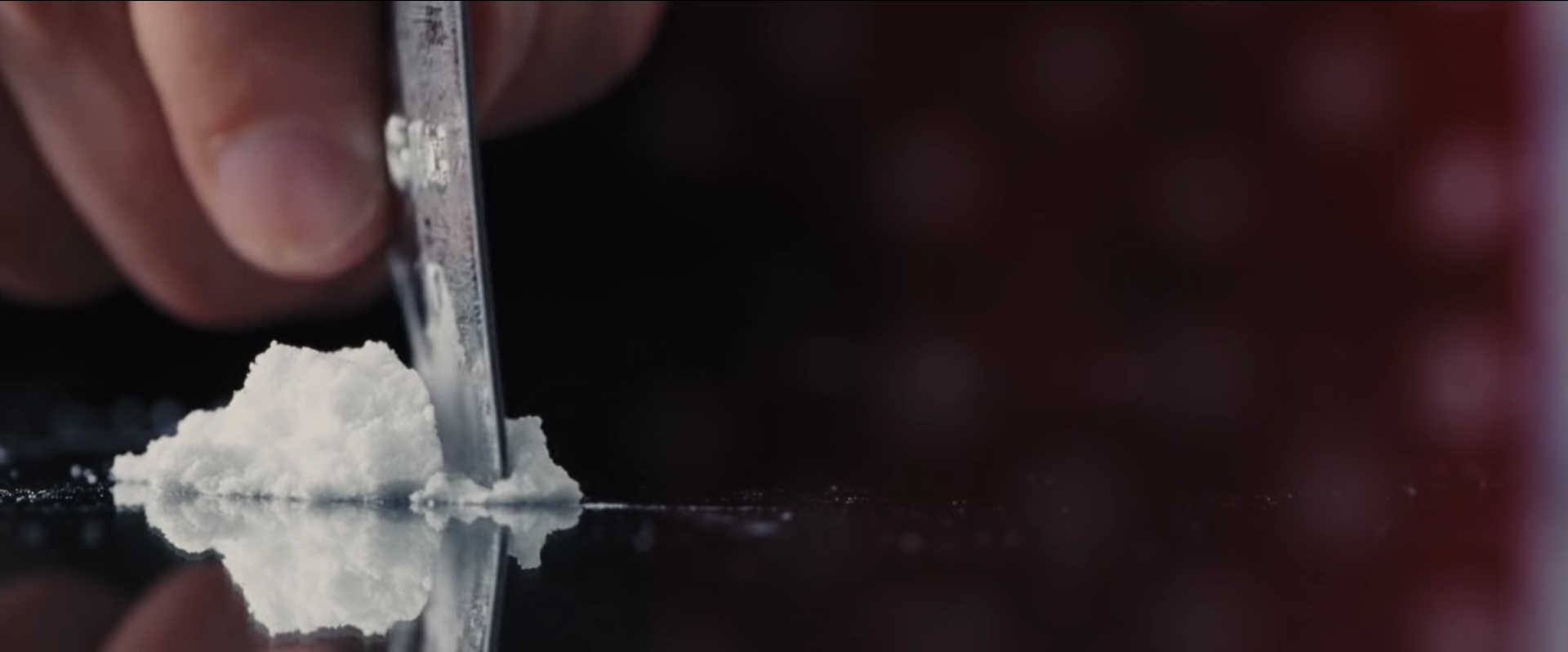
The props used in this title sequence are very important in establishing the crime genre. As I researched before the genre conventions of crime movies, many common props include, drugs, money, and weapons. Drugs are clearly present throughout this video, as well as money.
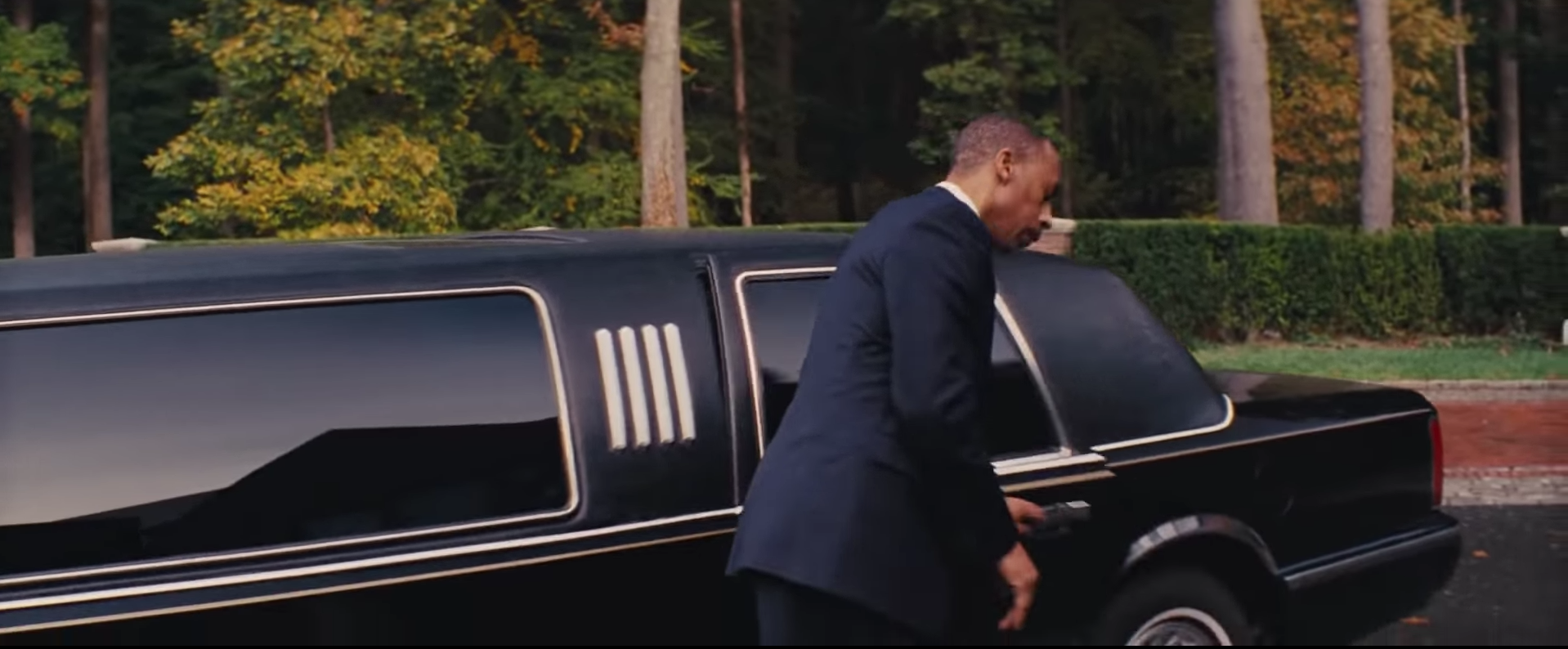
Shots of these props take up a majority of the title sequence, placing importance on this to the storyline. Another prop that emphasized his wealth was the limo. He has his own chauffeur to drive him to work in an expensive car, which reveals more about his character and personality.
Cinematography
In the beginning as DiCaprio’s character is descending down the stairs, a high angle shot is put in this scene. This immediately establishes his status as very high-up and authoritative.
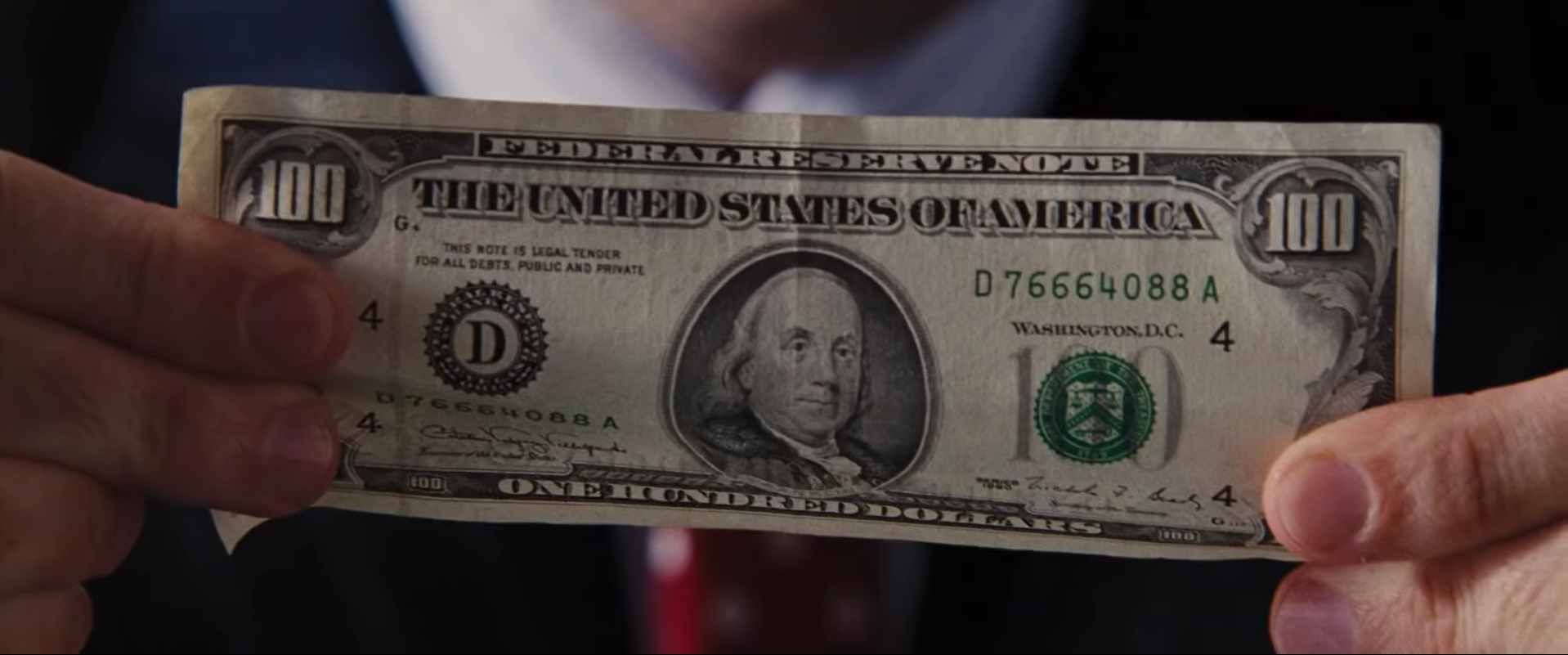
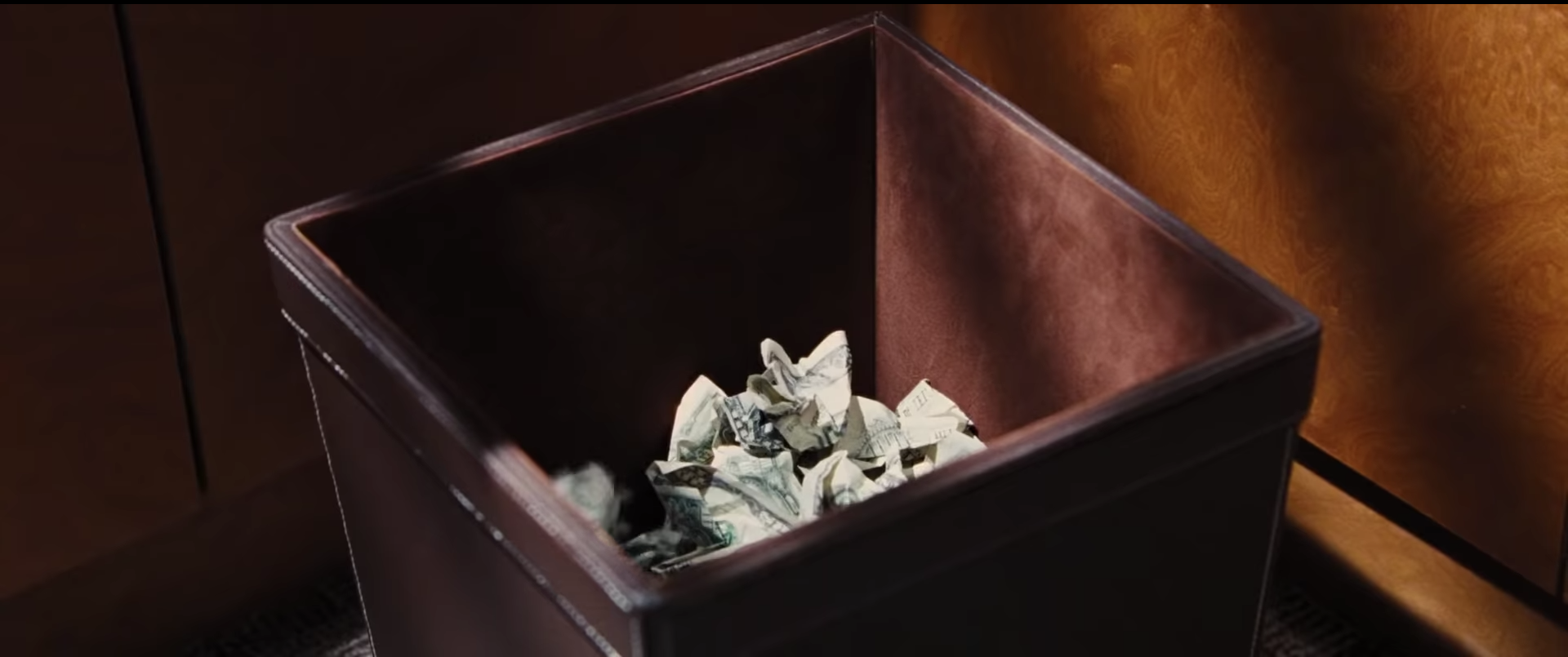
There is also a few extreme close-ups throughout the title sequence. The most noticeable one was on the cocaine. Drugs are a very prominent part of the crime genre, so having the focus averted to drugs in the shot helps to establish which genre the audience is watching. Another close-up follows shortly after of the $100 bill that DiCaprio used to inhale the drugs. This emphasizes that he has great wealth that he is using it so casually for other purposes. An extremely brief close-up is present on the basket of crumpled up hundred dollar bills. Obviously, this also represents him being very rich because he has an entire wastebasket full of money that he tosses in there.
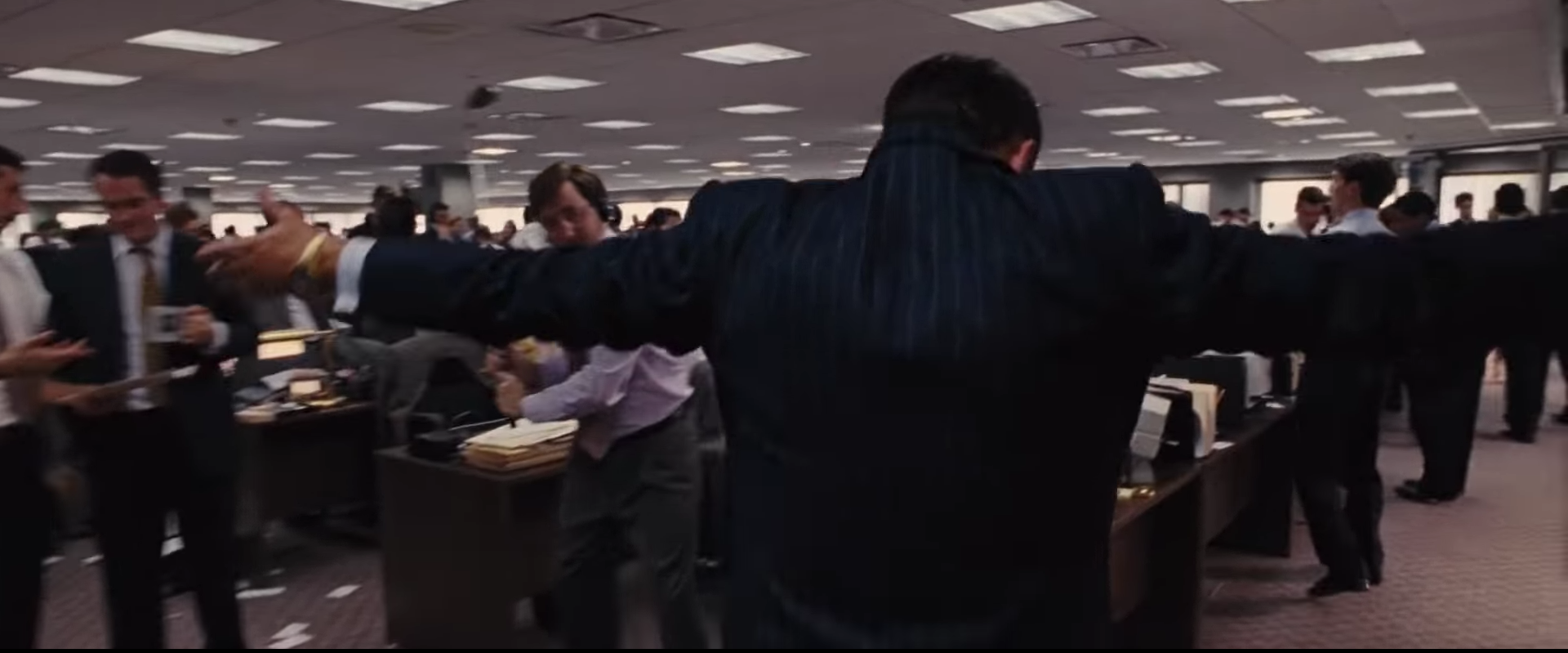
A tracking shot is used to follow DiCaprio’s movements from his office to the general area where the others are. This places the center of attention on him because the story is following from his point of view.
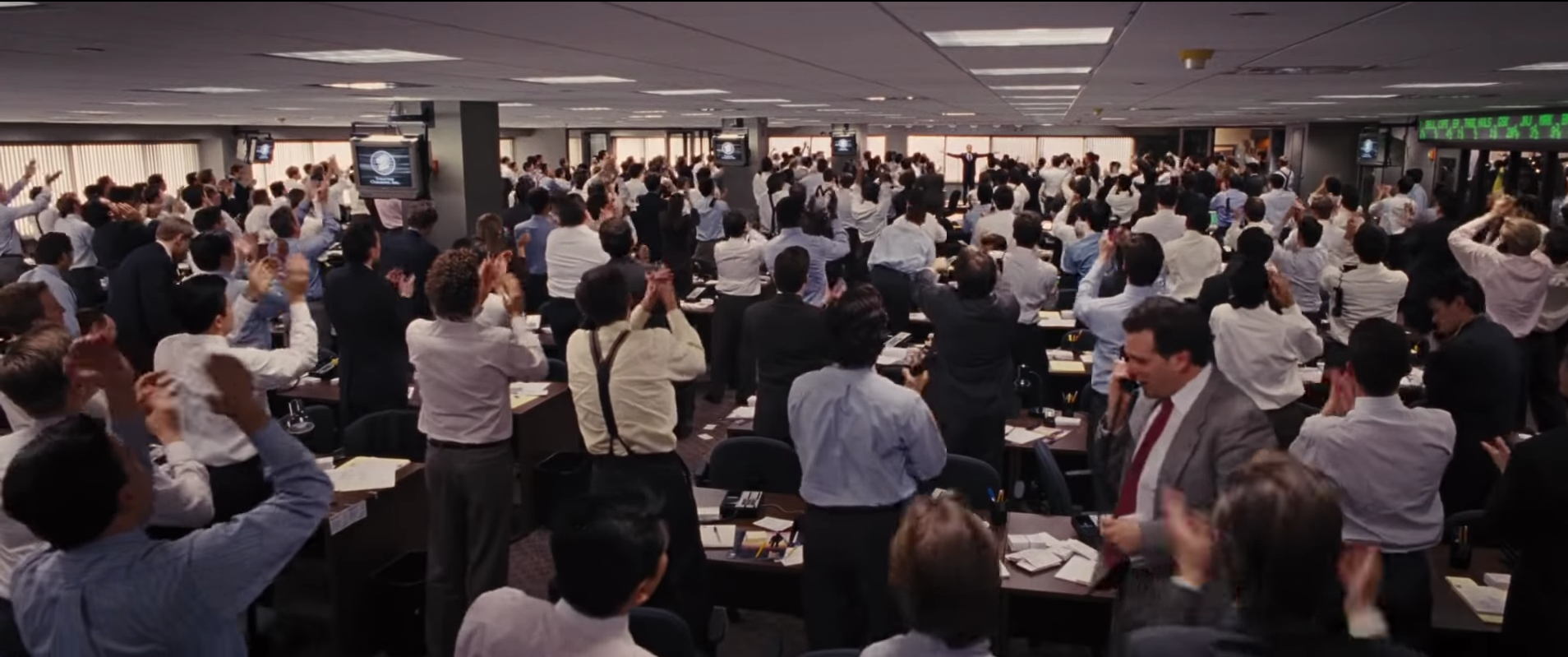
A long shot, or crowd shot, is placed to show all of the people working for him being very admirable towards him. They are praising him and applauding for him when he leaves his office to see the other men.
Editing
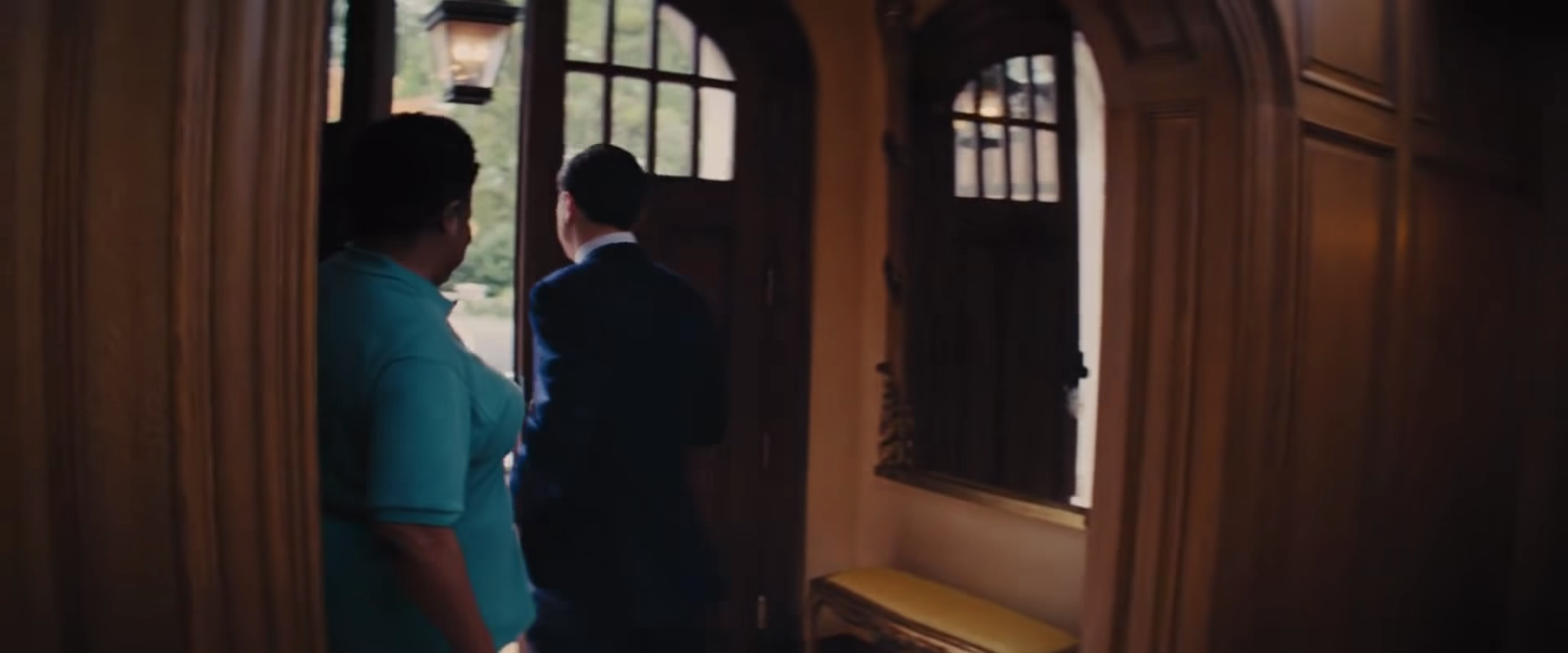
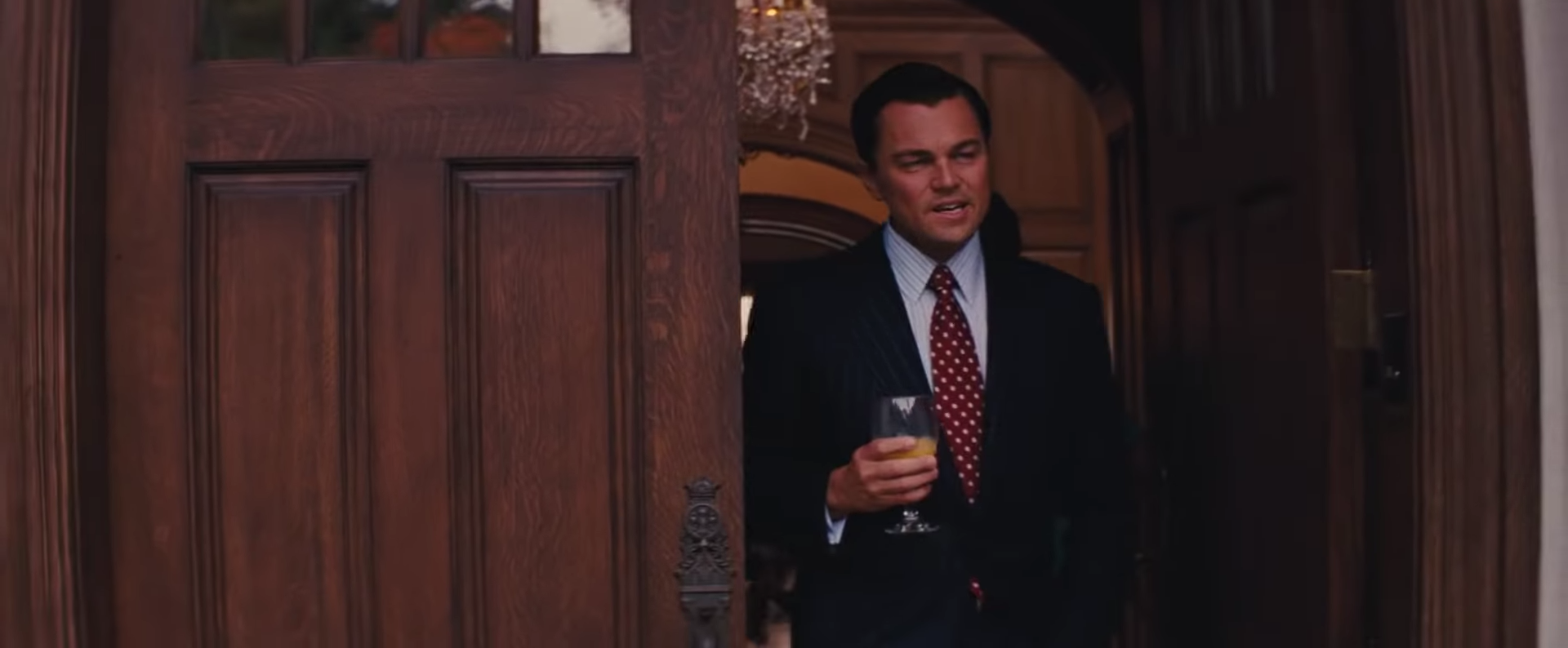
These two pictures below show a match cut. DiCaprio’s character was walking out of the door and then it cuts to him walking out of the door with another shot. Match cuts such as these work to preserve continuity throughout the movie so that it flow well and does not disorient the viewer.
Sound
This clip had some instances of dialogue, which is an example of diegetic sound. There was also some background music, which would be considered non-diegetic sound because it originated from outside the film’s world. It added an effect of representation for DiCaprio’s character because it was classy music and he is a very wealthy man.
In general, women in film are considered to be inferior the majority of the time. They are usually given negative characteristics such as being greedy or dumb, or often times are not even given much of a character. It is not uncommon to see male-dominated films, where women will only appear as the smaller unimportant side characters or the “prize” that the guy has to earn at the end of a movie. The point is, women are not given important roles in film, and this is especially present in the genres that our movie has taken part in.
Typically men are casted as the main characters in a crime movie. However, when a woman is casted, the creators of the movie will make them have more masculine qualities because they try to fit them into a male stereotype. In general, women are seen as the weaker sex and are represented well when they exhibit more male characteristics.
Class is another social representation that is depicted in crime movies. Whether it be through mine-en-scene or cinematography, a film in the crime genre will usually have some distinction between members of different social classes and statuses, as this a big theme in crime.
As I said in the beginning of this blog, I have always been an avid fan of crime/mystery. One show that I have always loved was “Murder She Wrote”. This television series follows the story of author, Jessica Fletcher. Her career is writing murder mystery novels and alongside that, she helps to solve several murder mysteries in her real life as well. Often times, she is not given full support because she is an elderly women who is dealing with dangerous criminals. This show is very apparent in its centrality of men. Most of the authority figures such as the police, or even her friends, are males. She is one of the only few women in this show and it helps to establish the gender bias present in the crime genre.
Women in the mystery genre are generally seen as the victims and are therefore very vulnerable and helpless. It is very rare to see a strong empowered female being a lead authoritative figure in film and especially in genres such as these.
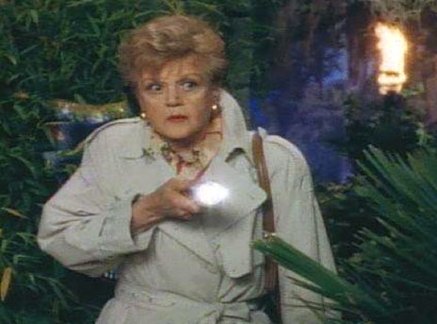
Jessica Fletcher in Murder She Wrote is a female detective. Does not have the typical look of a detective, but is constantly surrounded by male figures in every episode of the show.
Movies in the drama genre focus on a character facing certain conflicts, whether it be with themselves, other people or with other outside forces of nature. Some common themes within drama movies are “current issues, societal ills, and problems, concerns or injustices, such as racial prejudice, religious intolerance (such as anti-Semitism), drug addiction, poverty, political unrest, the corruption of power, alcoholism, class divisions, sexual inequality, mental illness, corrupt societal institutions, violence toward women or other explosive issues of the times.”
Mise-en-scene: Generally, the lighting remains fairly low-key throughout because drama is supposed to build suspense and this amount of lighting adds that effect. The setting usually takes place at more lower class locations. This could range from ghettos to schools or other places such as houses and government buildings. The costumes usually accurately portray the character. Characters in the drama genre can be practically anything, but are most commonly younger people, criminals, or authority figures. Their costumes will correspond according to their occupation. Common props in the drama genre are weapons, phones, technology and alcohol/drugs.
Cinematography: Just like crime movies, low and high angle shots are used to emphasize the status of that character. When a character is shown in a high-angle shot, the audience can infer that they are a well-respected and higher authority character. On the other hand, when a character is shown in a low-angle shot, they are perceived as a lower status character and are generally treated as lesser than others. Many close-ups are also utilized in the drama genre because they focus more on the emotions of the character and this is what drama is driven by.
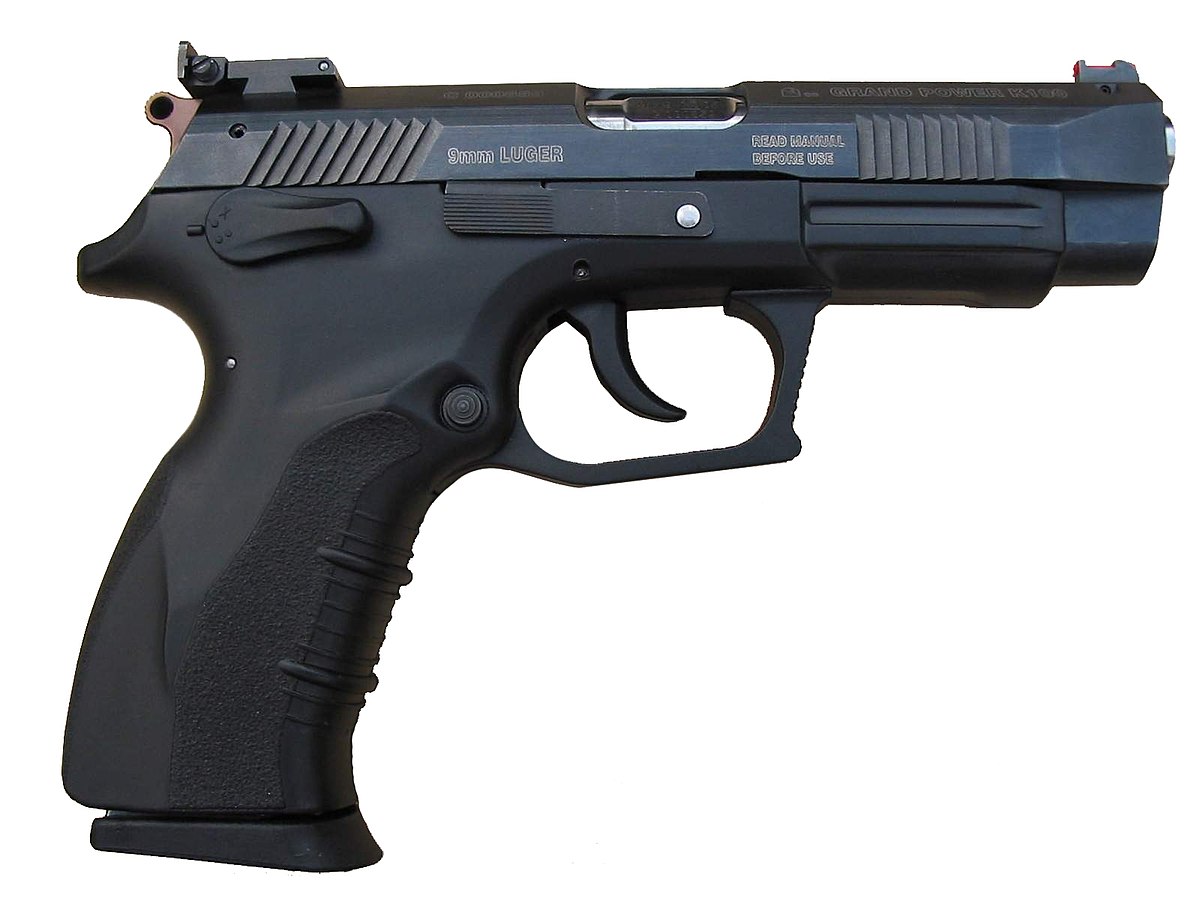
Guns are one of many weapons that are used in drama films and help to boost the suspense of the scene.
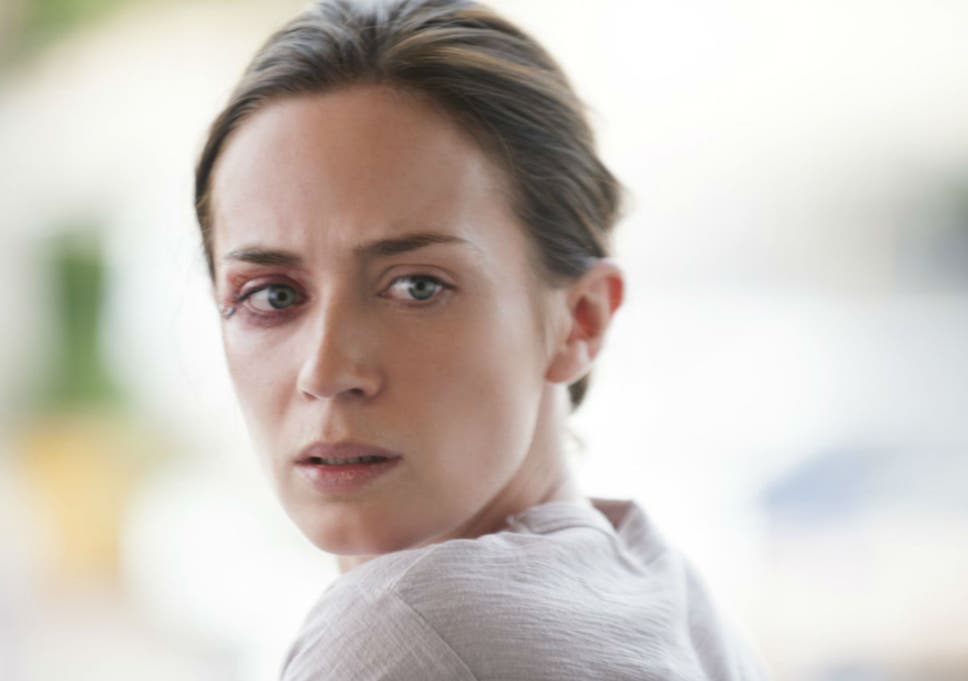
In the drama movie, Sicario, close-ups as seen here are used to focus on the emotion of a character and to make the scene more emotionally intense.
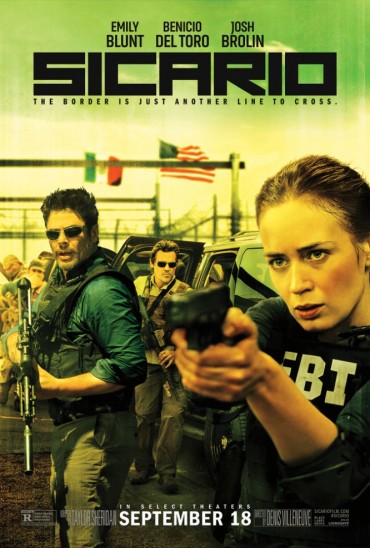
One of the biggest ways movies capture their audience’s attention is through the use of different fonts. This can represent a great deal about a movie, with just the way the title is written. In crime movies, I took notice that the titles are generally very short. Examples include “Sicario,” “Narcos,” and “Making a Murderer.” Another notable feature of the font was the boxy look of it. The letters are quite large and eye-catching and are very dark to garner the audience’s attention. This information is useful because during the “distribution and exhibition” phase of the project, learning about the techniques behind the fonts helps to know what will draw in a bigger audience. An effective movie poster can go a long way in selling a movie to the public. Titles of movies find a way to effectively give the audience an idea of what the movie is about, without revealing too much information. The definition of Sicario is a hitman or hired killer, so having this as a title reveals that the movie will be based around this theme and gives the audience a perception of the genre as well.
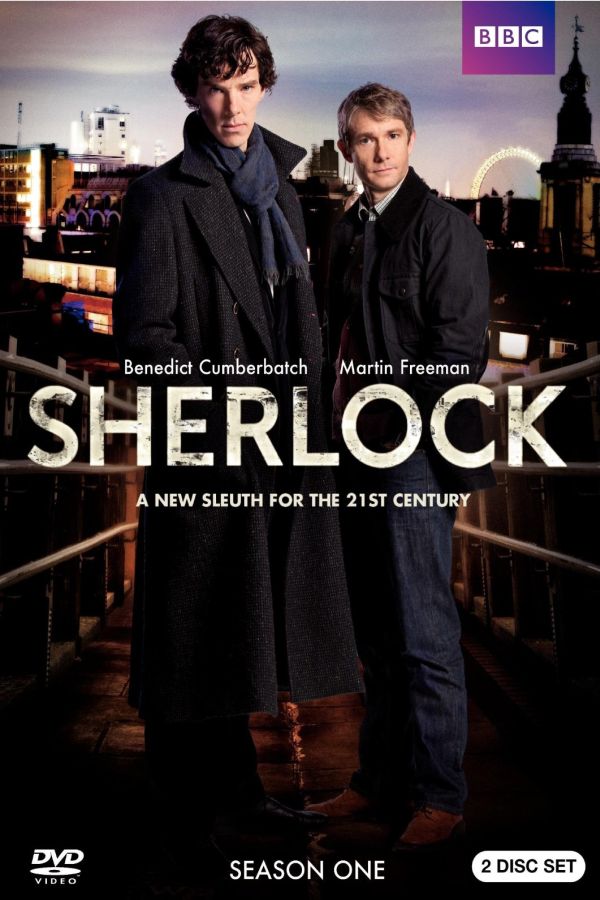
In the television crime drama “Sherlock”, the font is also in big, blocked letters. In this example, the title is white with black undertones and fades on top. This could represent how there is darkness within the good in crime genre movies and this title seems to effectively establish a crime feeling.
To better practice the skills necessary for constructing our title sequence, my partner and I felt that it would be beneficial to analyze a film clip in our genre. This could teach us more about the conventions as well as prepare and inspire us for ideas in our own project. The film clip we analyzed is from a movie called, “Murder on the Orient Express”. It aligns with our title sequence, carrying aspects of crime, mystery, drama and thriller genres within it.
Cinematography: A long handheld shot is used which emphasizes the chaotic nature of the sequence. It is very shaky and increases the overall tension of the clip. (1:13-1:50) Another type of shot used are pans and whip pans. They help to show each character involved in the murder. It also adds suspense and fear in the audience because it increases the pace and rhythm of the scene. (1:35) This entire killing scene is a low-angle shot which shows that in this moment, they are placed in a position of superiority to the victim. The slight low angle and high angle shots from the detective to Pfieffer’s character shows the power the detective has over her that she is being found out as the main killer. (0:38-0:47) There is also another high angle shot (2:31-2:41) to show Pfeiffer’s character being in a higher authority than the victim who is lying on the bed, helpless and dead. These observations fit right into the researched genre conventions of the crime genre because high angle and low angle shots are consistently used to develop and portray a representation of status.
Mise-en-scene: The lighting in the clip is very low-key throughout and has aspects of chiaroscuro, with deep shadows to make the overall tone very creepy and suspenseful. The setting of this scene is on a train, which is a very intimate and enclosed space, which also contribute to the suspenseful and scary tone of the clip. The props also establish this same tone. Different objects such as a knife, pocket watch and window were used symbolically to convey important messages and represent an important aspect the story. The costuming of each character varies over a wide range and it help sot add unique characteristics to each person and distinguish them from one another. Blocking is another part of mise-en-scene that is used in this clip. The characters that commit the murderous crime are placed in close proximity together, showing that they are all bonded together, and in this case are bonded by their murder.
Editing: This extract from “Murder on the Orient Express” is filled with various match cuts. An eye-line match cut is shown when the woman is stabbed in the back and when it transitions to the present clip of her recalling the story. (0:36) This match cut serves the purpose of telling the viewer that these are the same characters because it could seem confusing with the woman having two different costumes. The majority of the match cuts were match-on-action cuts because it is meant to preserve the continuity. One example is when the man is being killed on the bed and it immediately cuts to the surrounding people killing him. (1:13) This makes the scene flow better by showing the victim and the criminal sequentially after. Another editing technique was the black and white effect, which helped to show when flashbacks were occurring.
Sound: Non-diegetic sound was used when all the characters were killing the man on the bed. Music was played over the scene to emphasize the creepy feeling throughout the murder. Dialogue was used to preserve the continuity and keep the storyline and plot moving forward.
As said in the last post, our title sequence involves elements of four different genres: crime, drama, mystery and thriller. Since each drama is very distinct and complex on its own, my partner and I decided to split up the research. I was assigned crime and drama while my partner would do mystery and thriller, and we will then compile our research together to formulate the conventions of our own title sequence that would include aspects of all four.
Crime genre conventions:
As for the mise-en-scene of this genre, there are distinct characteristics for setting, lighting and costuming. The setting of crime movies is usually in banks, shops, jewellers, gang hiding spots, police stations, museums and homes. The costuming will usually portray the common character types of a lower class with poor or street clothing. The lighting is generally low-key and has shadows to produce the mystery aspect.
When editing crime movies, there are usually reverse shots placed throughout to represent flashbacks and the consequences of actions of what the character would have done if they hadn’t done said motions.
Cinematography techniques in crime movies include deep composition and shallow focus to show that there is a lot of chaos occurring, but only places the focus on one plane, either foreground, mid ground, or background. Long shots are also used to set the background and setting of the scene. Low and high angle shots are utilized to represent superiority and inferiority of certain characters. In this same line of thought, eye-level shots are used to portray equal importance of characters.
Crime movies actually have some common themes between them, usually making a statement about social status and the government system.


 Into the Truth